EVE Fanfest 2025 proved that EVE Online’s influence is undeniable
Heading into EVE Fanfest 2025, I had no idea just how big this sci-fi MMO from CCP Games really was. Sure, I’d seen headlines pop up every now and then, but I still mostly thought of it as a niche game with a die-hard fanbase—something that only made waves when a crazy in-game heist or record-breaking event happened. But after spending time in Iceland around EVE Fanfest earlier this month, it finally hit me just how much of an impact EVE Online and CCP Games have had.
I didn’t just see how passionate the fans at the event were—I also saw EVE expanding with new games and a growing indie scene in Iceland that owes a lot to EVE Online’s success. EVE: Vanguard looks like a solid shooter that could pull in a whole new crowd, and Iceland’s indie game scene might just be where the next surprise hit comes from.
The phrase “EVE Forever” got thrown around a lot at Fanfest. Sure, it’s a hype-up slogan for the fans who traveled to Reykjavik for this BlizzCon-style event, but it points to something bigger. It’s a sign that EVE is becoming a full-blown sci-fi franchise with a lasting legacy, both through its own games and its influence on Iceland’s budding game industry.
More Than One Game
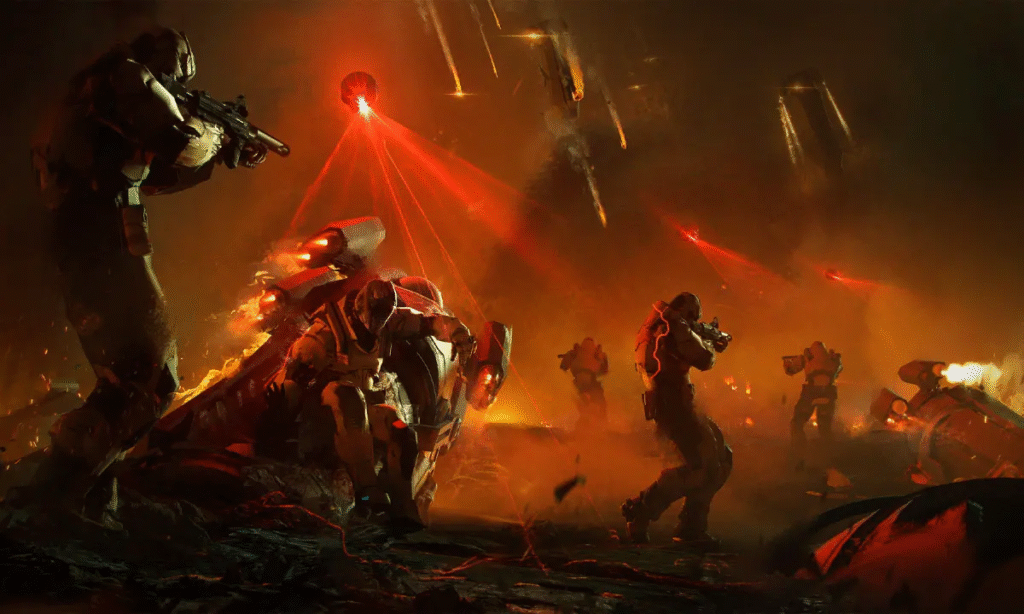
While the EVE Online: Legion expansion was the big focus of Fanfest this year, it wasn’t the only game getting attention. Up on the second floor of the Harpa concert hall (where the event took place), players could check out EVE: Vanguard, a new MMO shooter in development by CCP Games London. Vanguard is an extraction shooter like Arc Raiders or Marathon—you drop onto planets, fight AI enemies and other players, and grab loot.
Even in this early state, Vanguard feels smooth to play, with punchy weapons that lean harder into sci-fi than your usual extraction shooter fare. It also brings in MMO elements with its “Bastion” system, where players battle for control over planet clusters, leading to inevitable clashes as Bastions expand. As someone who never got too deep into EVE Online because of its hardcore nature, Vanguard felt way more accessible right off the bat as a PC shooter.
Its ties to EVE Online—through world persistence and the Bastion system—also give it an edge over more generic extraction shooters. It’s even pulled in developers like Senior Producer Jamie Stanton, who wasn’t much of an EVE player before joining CCP but believed in the franchise’s potential to draw people in.
“I think the power of the EVE brand and its reputation will pull in a lot of players who, even if they don’t want to play [EVE Online], will want to be part of that universe,” Stanton told Digital Trends.
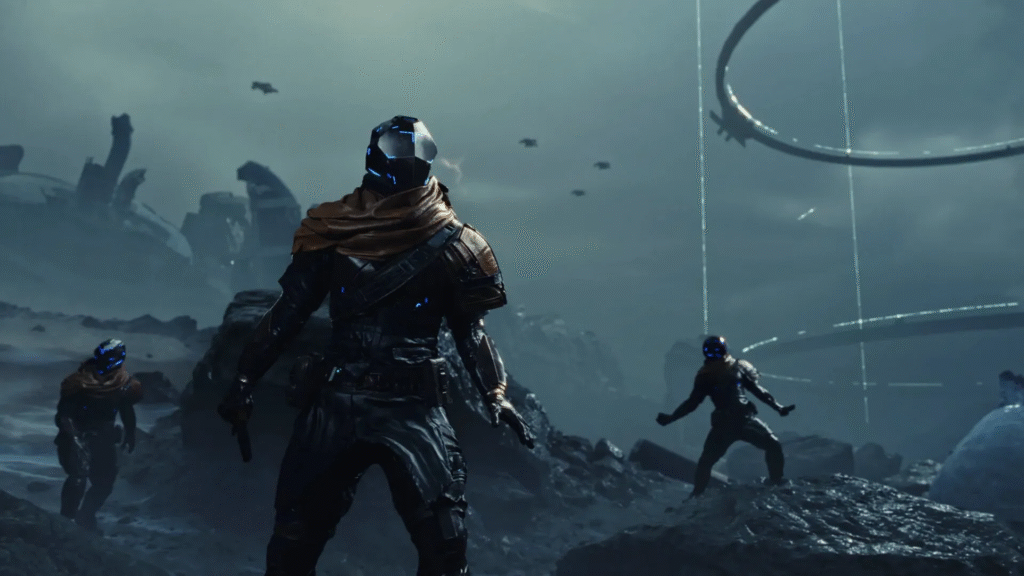
For anyone who doesn’t want to wrestle with a dense UI or feel like they’re playing Microsoft Excel as much as a game, EVE: Vanguard will be a much friendlier way into the EVE universe when it launches in 2026. I’m less optimistic about EVE Frontier, CCP’s Web3 survival MMO, but it’s already got a dedicated fanbase—some even joined a hackathon at Fanfest to help shape the game. Add in mobile titles like EVE: Galaxy Conquest and EVE: Echoes, plus a teased tabletop dice game, and by the end of the 2020s, EVE could have more hit games than ever before.
An Emerging Industry
Even if you’ve never played an EVE game (or have no plans to), you might still end up playing an Icelandic indie soon. Just like CD Projekt Red helped kickstart Poland’s game industry years ago, CCP did the same for Iceland’s. IGI chairman Halldór Kristjánsson walked me through Iceland’s game dev history before Fanfest. For a long time, it was pretty small outside of CCP and Plain Vanilla Games’ QuizUp. Then, in 2018, CCP was bought by Pearl Abyss (the studio behind Black Desert Online) for $425 million.
According to Kristjánsson, that deal had ripple effects. Developers left CCP to start or join indie studios, and investment in Icelandic game companies grew. Now, nearly seven years later, the results are clear. Games like WWII card battler Kards, party game No Time to Relax, and survival MMO Pax Dei have found modest success. More are on the way, and CCP even gave some of these devs space to demo at Fanfest 2025.
I loved playing Walk of Life, a follow-up to No Time to Relax that leans even harder into being a chaotic life-sim party game. Gang of Frogs takes inspiration from Helldivers 2 and Risk of Rain 2, offering a fun roguelite co-op shooter where you play as cartoon frogs instead of soldiers. Island of Winds is a single-player puzzle adventure inspired by Iceland’s volcanic landscapes and history. And Dig In is a WWI strategy game where you build trenches and deal with delayed orders—no instant commands here.
I can see breakout potential in these. Walk of Life has the charm to be a Jackbox-style hit on Twitch, while Dig In could grab strategy fans who love historical games. If any of them blow up like Balatro or Clair Obscur: Expedition 33, their success will trace back to EVE Online in some way.
The devs I talked to were upfront about that. Gang of Frogs’ lead developer Ingólfur Halldórsson (a former CCP software engineer) put it bluntly: “I don’t think there’s any studio in Iceland that hasn’t had some kind of personal connection to CCP.” That was clear from every indie dev I spoke to—no matter the studio size, at least one person had worked at CCP.
EVE Online’s Legacy
If you’re not deep into EVE Online’s mechanics or its player-driven history in New Eden, you might not realize its impact. It pulls a dedicated crowd to a yearly convention, directly or indirectly spawned studios across Iceland, and is pushing further into the mainstream with games like EVE: Vanguard.
At Fanfest 2025, the mood was optimistic about EVE’s future and Iceland’s game industry. Of course, it’s too soon to say how far these EVE spinoffs and indie games will go. CCP’s track record with shooters like Vanguard isn’t flawless—they shut down Dust 514 and canceled Project Nova. Indies like Gang of Frogs or Walk of Life could break out, but the indie scene is more crowded than ever. In 2025, no game is a surefire hit, even with a known IP or big budget.
Still, CCP and Iceland’s game industry as a whole are thriving with confidence while other parts of the industry struggle. Dig In designer (and Vitar Games founder) Baldvin Albertsson pointed out that Iceland’s young game scene avoids much infighting, and he believes CCP’s influence shows how one studio can shape things on a “microscopic level.”
I might not dive into EVE Online’s complexities anytime soon, but its impact is harder to ignore than ever. Unless something unexpected happens at CCP, EVE is becoming a sci-fi franchise you can’t overlook. And even if EVE Online and its spinoffs fade one day, its legacy will live on through all the indie studios it helped create. If I ever go back to Fanfest, I won’t be underestimating it again.
Disclaimer: Business Iceland covered Digital Trends’ travel and accommodations for EVE Fanfest.

Related Posts

Vibe Coding is Shoot and Forget Coding
Our favorite video games of 2025 so far: Clair Obscur, Blue Prince, and more